Mold Testing vs Mold Inspection: What's the Difference?
Many Charleston homeowners use the terms "mold inspection" and "mold testing" interchangeably, but they are actually two different services that serve different purposes. Understanding the difference can help you choose the right service and avoid paying for testing you don't need.
What Is a Mold Inspection?
A mold inspection is a visual assessment of your property performed by a trained professional. The inspector walks through your home looking for signs of mold growth, water damage, and moisture problems. They use tools like moisture meters and thermal imaging cameras to detect hidden moisture that could be supporting mold growth behind walls, under floors, or in attics and crawl spaces.
What a Mold Inspection Includes
- Visual examination of all accessible areas
- Moisture meter readings on walls, floors, and ceilings
- Thermal imaging to detect temperature differences that indicate hidden moisture
- Identification of visible mold growth and its likely source
- Assessment of ventilation and humidity levels
- Recommendations for next steps (remediation, testing, or moisture control)
A mold inspection answers the question: "Is there mold, where is it, and what's causing it?"
When You Need a Mold Inspection
- You can see or smell mold but aren't sure how widespread it is
- You've had water damage and want to check for hidden mold
- You're buying a home and want a pre-purchase mold assessment
- You want to understand why mold keeps coming back
- You need a professional opinion on whether remediation is necessary
What Is Mold Testing?
Mold testing goes a step beyond visual inspection by collecting physical samples and sending them to a laboratory for analysis. Testing tells you exactly what types of mold are present and in what concentrations. This requires specialized equipment and accredited laboratory analysis.
Types of Mold Testing
Air Quality Testing (Spore Traps) The most common type of mold testing. Air samples are collected from both indoor and outdoor locations. The lab compares indoor spore counts to outdoor baseline levels to determine if elevated mold levels exist inside your home. This is the best test for detecting hidden mold you can't see.
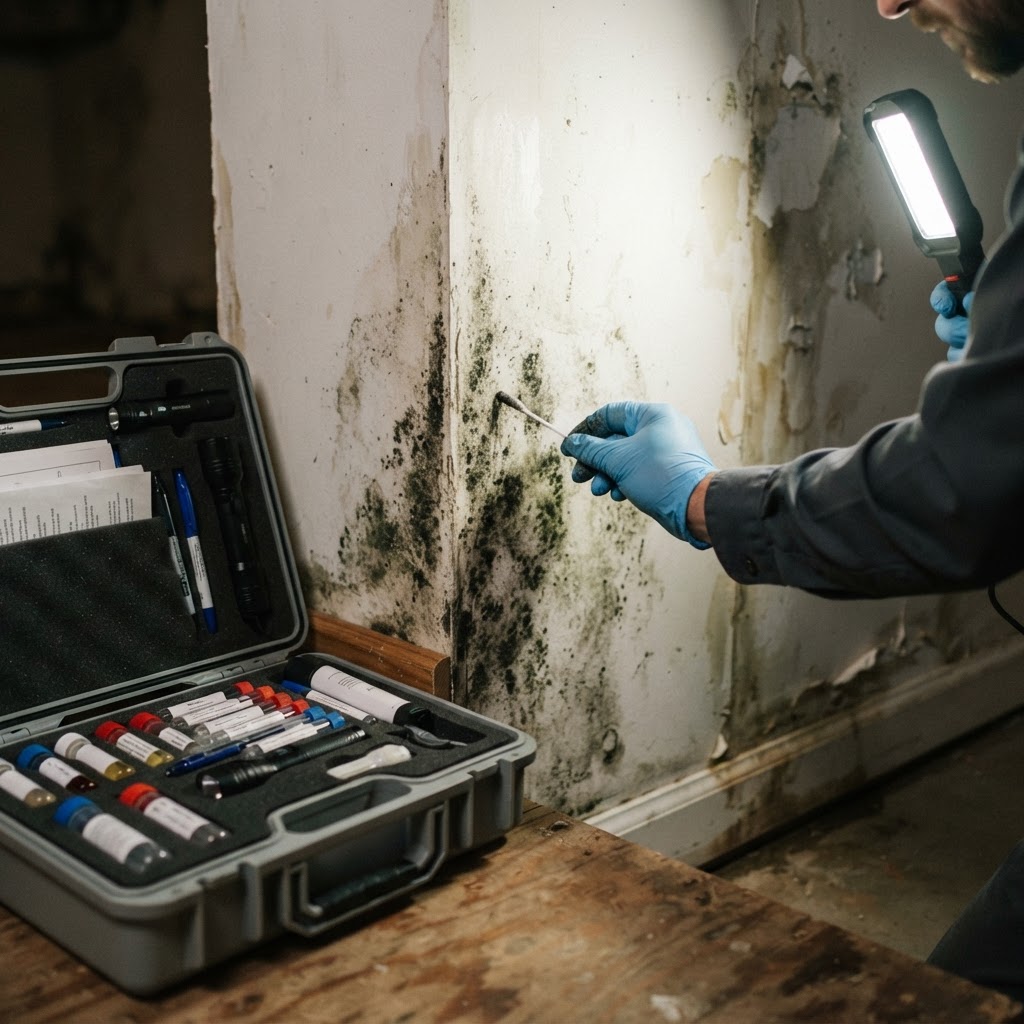
Surface Sampling (Swab or Tape Lifts) A swab or tape is pressed against visible mold growth and sent to the lab for species identification. This tells you exactly what type of mold is growing on a surface but doesn't tell you about airborne spore levels.
Bulk Sampling A small piece of the affected material (drywall, carpet, wood) is sent to the lab for analysis. This is used when surface sampling isn't sufficient.
ERMI Testing (Environmental Relative Moldiness Index) A specialized DNA-based test that identifies 36 mold species associated with water-damaged homes. It's more expensive ($300-$600) but provides the most detailed analysis.
When You Need Mold Testing
- You smell musty odors but can't find visible mold (air testing can detect hidden growth)
- You need lab documentation for an insurance claim or legal matter
- You're experiencing health symptoms and need to identify what mold species are present
- You've had remediation done and need clearance testing to verify it worked
- You're buying or selling a home and need official lab results
- You want to know if specific toxic mold species like Stachybotrys are present
Key Differences at a Glance
| Feature | Mold Inspection | Mold Testing | |---|---|---| | What it does | Visual assessment of property | Lab analysis of samples | | Equipment | Moisture meter, thermal camera | Air sampling pumps, spore traps, swabs | | Results | Professional opinion and recommendations | Lab report with mold species and spore counts | | Time to results | Same day | 2-5 business days (lab processing) | | Cost | Often free | $150-$600 depending on scope | | Detects hidden mold? | Indirectly (via moisture detection) | Yes (air testing detects airborne spores) | | Identifies mold species? | No | Yes | | Best for | Finding the source and extent of mold | Confirming what type of mold and how much |
Which Do You Need First?
In most cases, start with a mold inspection. A professional inspection can often tell you everything you need to know: whether mold is present, where it's growing, what's causing it, and whether remediation is necessary. If the inspector finds visible mold, you may not need testing at all before proceeding with remediation.
You should add mold testing when:
- The inspection doesn't find visible mold but you still suspect it (air testing can detect hidden growth)
- You need official lab documentation for insurance, legal, or real estate purposes
- You want to identify the specific mold species for health reasons
- You need clearance verification after remediation
Can You Do Mold Testing Yourself?
DIY mold test kits are available at hardware stores and online for $20-$50. These typically include petri dishes that you set out to collect settling spores. While inexpensive, professional mold testers do not recommend DIY kits because:
- They can't distinguish between normal outdoor mold levels and problematic indoor levels
- They don't provide the indoor/outdoor comparison that professional air sampling does
- They can't identify mold species without sending samples to a lab (which costs extra)
- They don't include a professional assessment of moisture sources and building conditions
- Results are often misleading, showing mold that's present in every home
A professional inspection combined with lab-verified testing gives you accurate, actionable results.
Charleston's Mold Testing Experts
Seaside Mold Medic offers both mold inspections and professional mold testing throughout the Charleston area. We start with a free visual inspection to assess your property, and recommend lab testing only when it's actually needed. Call (844) 393-2902 to schedule your free inspection.

